

 Türkçe
 Español
Product overview
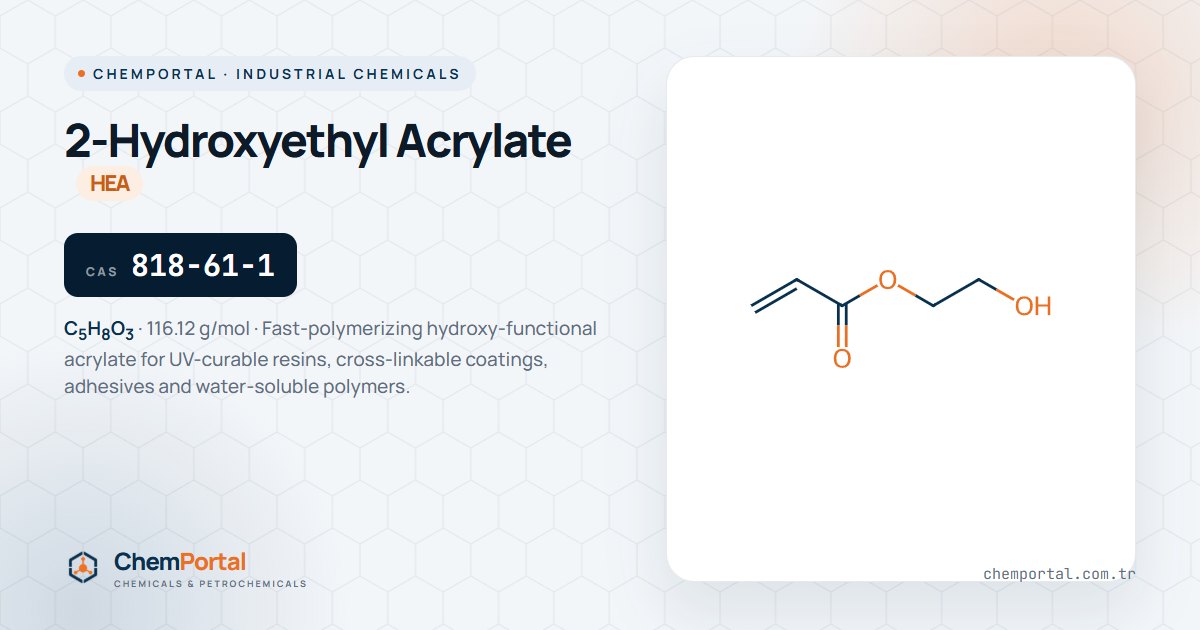
2-Hydroxyethyl acrylate (HEA, CAS 818-61-1) is the ester of acrylic acid and ethylene glycol. It is a colorless, water-soluble liquid that pairs the highly reactive acrylate double bond with a primary hydroxyl group, so it both polymerizes quickly under UV or radical initiation and leaves OH sites for later cross-linking with isocyanates, melamines or anhydrides.
The grade offered is specified at ≥ 93 wt% purity, ≤ 20 APHA color, ≤ 0.3 wt% acidity, ≤ 0.3 wt% moisture and a density of 0.942–0.944 g/cm³ at 20 °C, stabilized with 200 ± 10 ppm MEHQ. HEA melts at −60.2 °C, boils at 210 °C and has a closed-cup flash point of 101 °C.
HEA is transported as UN 2927, class 6.1, packing group II; it is a skin sensitizer and must be handled with suitable gloves and eye protection. ChemPortal supplies it in plastic drums and IBC totes with a certificate of analysis.
Key features
- Purity ≥ 93 wt%, color ≤ 20 APHA
- Stabilized with 200 ± 10 ppm MEHQ
- Primary hydroxyl group plus fast-curing acrylate function
- Boiling point 210 °C, flash point 101 °C (CC)
- UN 2927, class 6.1, packing group II; drums and IBCs
Applications
- UV- and EB-curable coatings, inks and adhesives
- Acrylic polyols for polyurethane coatings
- Pressure-sensitive and structural adhesives
- Water-soluble and thermosetting acrylic resins
- Textile, leather and paper finishing polymers
- Reactive intermediate for urethane acrylates and specialty monomers
Analysis specification
| Parameter | Limit |
|---|---|
| Color (APHA) | ≤ 20 |
| Purity (wt%) | ≥ 93 |
| Acidity (As methacrylic acid) PPM | ≤ 0.3% |
| Density (at 20°C) g/cm³ | 0.942-0.944 |
| Moisture (PPM) | ≤ 0.3% |
| Polymerization inhibitor MEHQ (ppm) | 200±10 |
On a small screen, scroll the technical table horizontally.
Physical properties
- Appearance
- Colorless liquid
- Melting point
- -60.2 °C
- Boiling point
- 210 °C
- Flash point
- 101 °C(CC)
- Solubility
- Soluble
Identifiers
| CAS No. | 818-61-1 |
| EINECS No. | 212-454-9 |
| HS code | 2916140010 |
| Formula | C5H8O3 |
| Molecular weight | 116.12 g/mol |
| SMILES | C=CC(=O)OCCO |
| InChI | InChI=1S/C5H8O3/c1-2-5(7)8-4-3-6/h2,6H,1,3-4H2 |
| InChIKey | OMIGHNLMNHATMP-UHFFFAOYSA-N |
| Synonyms | 2-hydroxyethyl prop-2-enoate, ethylene glycol monoacrylate, glycol acrylate, HEA monomer |
Transport & safety
- UN number
- UN 2927
- Hazard class
- Class 6.1
- Packing group
- PG II
- Classification
- Class III dangerous goods
Dangerous-goods classification and handling instructions are provided in the safety data sheet, available on request.
Packaging & logistics
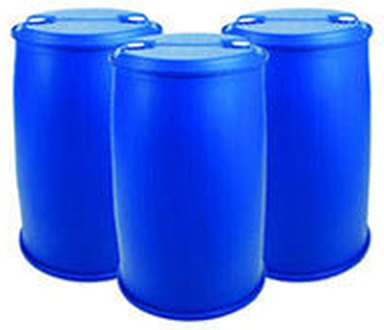
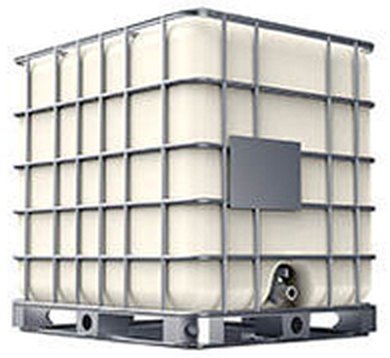
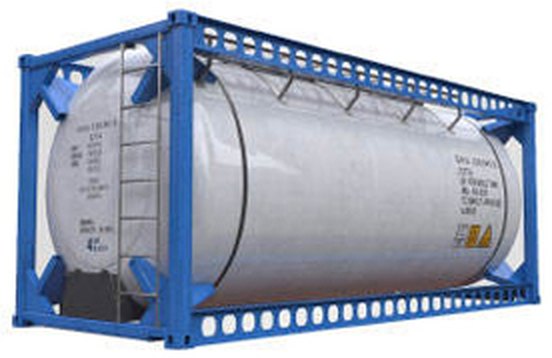
Standard packaging options. Confirm the packaging, lot size and delivery terms with your quotation.
Frequently asked questions
What is HEA mainly used for?
As a hydroxy-functional building block in UV-curable and cross-linkable acrylic resins. Its acrylate group cures faster than the methacrylate group of HEMA, which is why HEA is common in radiation-curing and adhesive formulations.
What are the handling precautions?
HEA is toxic and a skin sensitizer, shipped as UN 2927, class 6.1. Use gloves, goggles and ventilation, avoid skin contact and store below 30 °C in vented containers so the MEHQ inhibitor remains active. Consult the SDS before use.
Why is purity given as ≥ 93 wt%?
Commercial HEA contains a few percent of ethylene glycol diacrylate and residual acrylic acid formed during manufacture; the ≥ 93 wt% figure is the standard industrial specification and is suitable for coatings and adhesive resins.
In which packaging is HEA supplied?
Plastic drums and 1,000 L IBC totes, each lot with a certificate of analysis. Contact ChemPortal with the quantity and destination port for a delivered quotation and the SDS/TDS.
Published reference specifications. Confirm the current grade, SDS / TDS / COA, packaging and delivery terms with your quotation.