

 Türkçe
 Español
Product overview
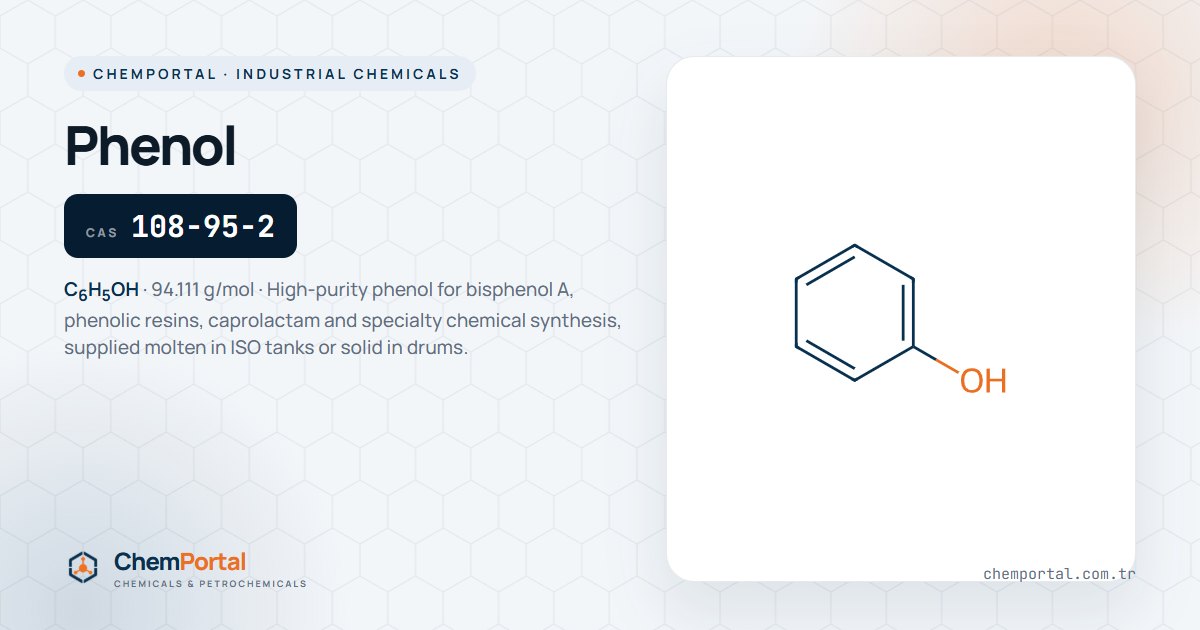
Phenol (hydroxybenzene, carbolic acid, CAS 108-95-2) is the simplest aromatic alcohol: a benzene ring carrying one hydroxyl group. At room temperature it is a colorless to white crystalline solid with a characteristic sweet, medicinal odor; it melts at 43 °C, boils at 181.9 °C and has a flash point of 72.5 °C. It is slightly soluble in cold water and miscible with ethanol, ether, chloroform and glycerol.
The grade offered is specified at ≥ 99.95 wt% phenol with ≤ 150 ppm total organic impurities, ≤ 100 ppm cresols, ≤ 500 ppm moisture, a crystallization point of ≥ 40.6 °C, molten color ≤ 20 Pt-Co, ≤ 0.005 wt% evaporation residue, ≤ 0.5 ppm iron and ≤ 10 ppm ignition residue. It is delivered as a clear molten liquid without precipitation or turbidity, or as crystalline solid.
Phenol is the starting point for bisphenol A (polycarbonate and epoxy resins), phenol-formaldehyde resins, caprolactam for nylon 6, alkylphenols, salicylic acid and many pharmaceutical intermediates. It is toxic and corrosive to skin and is transported as UN 2821. ChemPortal supplies it in drums or heated ISO tank containers.
Key features
- Purity ≥ 99.95 wt%; total organic impurities ≤ 150 ppm
- Cresols ≤ 100 ppm; moisture ≤ 500 ppm
- Crystallization point ≥ 40.6 °C; molten color ≤ 20 Pt-Co
- Iron ≤ 0.5 ppm, ignition residue ≤ 10 ppm
- Supplied molten in ISO tanks or solid in drums; UN 2821
Applications
- Bisphenol A for polycarbonate and epoxy resins
- Phenol-formaldehyde resins for wood panels, foundry and friction materials
- Caprolactam and adipic acid for nylon
- Alkylphenols, antioxidants and surfactant intermediates
- Salicylic acid, aspirin and other pharmaceutical intermediates
- Disinfectants, dyes and specialty chemicals
Analysis specification
| Parameter | Limit |
|---|---|
| Phenol, %wt | ≥ 99.95 |
| Total organic impurities(ppm) | ≤ 150 |
| Cresol impurities (ppm) | ≤ 100 |
| Crystallization point (°C) | ≥ 40.6 |
| Molten color(Pt-co) | ≤ 20 |
| Moisture(ppm) | ≤ 500 |
| Evaporation residual, %wt | ≤ 0.005 |
| Iron(ppm) | ≤ 0.5 |
| Ignition residual(ppm) | ≤ 10.0 |
On a small screen, scroll the technical table horizontally.
Physical properties
- Appearance
- Molten liquid (no precipitation, no turbidity) or crystalline solid
- Melting point
- 43 °C
- Boiling point
- 181.9 °C
- Flash point
- 72.5 °C
- Solubility
- Slightly soluble in cold water, miscible with ethanol, ether, chloroform, and glycerol.
Identifiers
| CAS No. | 108-95-2 |
| EINECS No. | 203-632-7 |
| HS code | 2907111000 |
| Formula | C6H5OH |
| Molecular weight | 94.111 g/mol |
| SMILES | Oc1ccccc1 |
| InChI | InChI=1S/C6H6O/c7-6-4-2-1-3-5-6/h1-5,7H |
| InChIKey | ISWSIDIOOBJBQZ-UHFFFAOYSA-N |
| Synonyms | hydroxybenzene, carbolic acid, phenyl hydroxide, benzenol, phenic acid |
Transport & safety
- UN number
- UN 2821
- Classification
- Flammable liquid
- Hazard characteristic
- Flammable toxic and corrosive
Dangerous-goods classification and handling instructions are provided in the safety data sheet, available on request.
Packaging & logistics
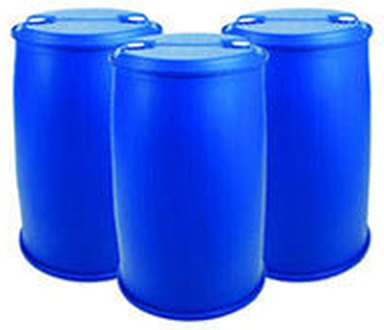
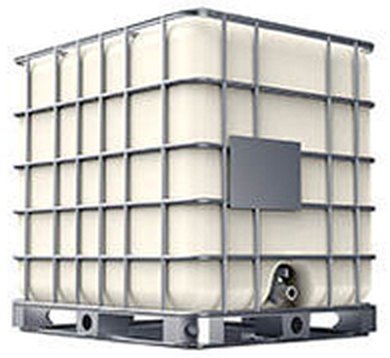
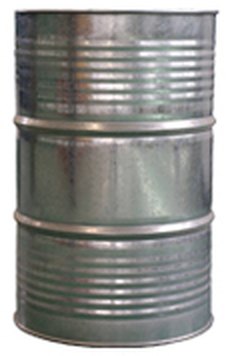
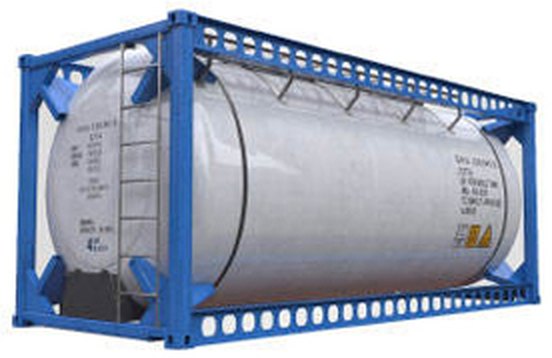
Standard packaging options. Confirm the packaging, lot size and delivery terms with your quotation.
Frequently asked questions
Is phenol supplied as a liquid or a solid?
Both. Bulk quantities travel molten at about 50–60 °C in heated ISO tank containers; smaller lots are supplied as crystalline solid in drums and are melted by the user in a hot-water or steam-jacketed room.
What does the crystallization point tell me?
It is a sensitive purity indicator: pure phenol crystallizes at about 40.9 °C and dissolved water or cresols lower the value. The ≥ 40.6 °C specification confirms the ≥ 99.95 wt% purity of this grade.
What are the handling hazards?
Phenol is toxic and causes severe chemical burns that may be painless at first; it is absorbed through the skin. Use full protective clothing, face protection and polyethylene glycol or copious water for first aid, as described in the SDS. Transport classification is UN 2821.
How can I request pricing?
Email or WhatsApp ChemPortal with the quantity, form (molten or solid), packaging and destination port; we reply with a delivered quotation, lead time and documentation.
Published reference specifications. Confirm the current grade, SDS / TDS / COA, packaging and delivery terms with your quotation.